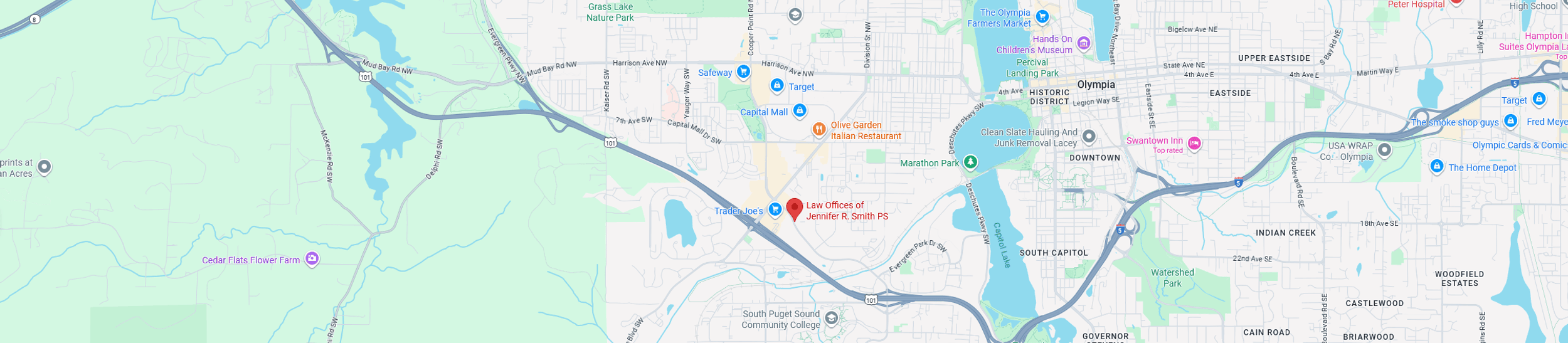
1800 Cooper Point Road STE 12
 M-F: 9:00am - 5:00pm



Family Law Firm in Shelton and Mason County, WA
If you are dealing with a family law issue in Shelton or elsewhere in Mason County, call Smith Law Group. We represent individuals and families throughout Mason County in these matters, and Managing Attorney Jennifer Smith has practiced family law exclusively since 2010.
Divorce, parenting disputes, and support issues can quickly turn into court proceedings with deadlines, filings, and decisions that affect your day-to-day life. If you need help understanding your options or responding to a case, call (360) 339-7488 to schedule a consultation.
Do Not Be Left Behind By The Family Law Process
Many people assume they will have time to think through each step of a case. In practice, things often move more quickly. Once a petition is filed and served, deadlines begin to run. The court may be asked to enter temporary orders within a short timeframe, especially when parenting or financial issues are involved.
You may be dealing with several issues at once. While you are trying to respond to a divorce petition, you may also be sorting out where the children will stay during the week, who is going to cover the mortgage or rent, or whether temporary support needs to be put in place. In some cases, one parent has already moved out by the time the paperwork is filed. In others, both parties are still in the same home and trying to manage day-to-day life while the case gets started. If you wait too long to respond or gather information, it can become more difficult to correct the course later.
Whether you need help with a divorce, adoption, guardianship, or something else, we are here to support you.
Legal Services for Family Law Matters in Mason County
Divorce and Property Division
Property must be identified, debts must be addressed, and decisions must be made about living arrangements going forward. Washington law allows a divorce to proceed when the marriage is irretrievably broken, and under RCW 26.09.030, at least ninety days must pass after filing and service before a final decree can be entered.
During that period, the court may address temporary arrangements. You may need to decide who remains in the home, how expenses are handled, and what financial structure will be in place while the case is pending. Those decisions can carry through the rest of the process.
Child Support and Financial Responsibilities
Support issues often come into focus early, particularly when households separate and expenses shift. The court applies the Washington Child Support Schedule under RCW 26.19, using the income of both parents to determine a monthly obligation.
You will need to provide accurate financial information, including income, expenses, and any additional costs related to the child. If income varies or comes from multiple sources, the court may look more closely at the records provided. Support orders can remain in place for years, so accuracy at this stage matters.
Parenting Plans
Parenting plans determine how children move between households and how decisions are made on their behalf. While the legal framework comes from RCW 26.09, the real challenge is creating a schedule that works on a practical level.
You will need to think through how exchanges will happen, how school schedules are handled, and how time is divided during holidays and breaks. A plan that leaves too many questions unanswered can lead to repeated disputes. A plan that reflects the realities of daily life tends to hold up better over time.
Civil Protection Orders
Civil Protection Orders are sometimes requested when there are concerns about safety, contact, or harassment. These cases can move quickly, and the court may issue a temporary order before a full hearing takes place.
If you are involved in a case like this, you will need to respond within the required timeframe and be prepared to present your position to the court. The outcome of that hearing can affect communication, access, and, in some cases, parenting arrangements.
Updating Existing Court Orders
A court order may work well for a period of time and then become difficult to follow as circumstances change. A shift in employment, a change in a child's needs, or a move can all raise questions about whether an existing arrangement still makes sense.
You cannot rely on informal adjustments alone. If a change is going to be ongoing, it should be addressed through the court. You will need to show why the change is necessary and provide enough information for the court to evaluate the request.
Spousal Maintenance
Spousal maintenance depends heavily on the facts of the case. Under RCW 26.09.090, the court considers factors such as the length of the marriage, the financial position of each party, and the time needed for one spouse to become self-supporting.
There is no standard outcome. Some cases involve short-term support, while others require a broader look at income, expenses, and future earning potential. You should expect the court to examine the financial details closely before making a decision.
Adoption
The adoption process involves court filings, notice requirements, and, in many cases, consent from a biological parent. If parental rights must be terminated first, that issue is addressed separately and under a higher legal standard.
Because adoption is permanent, the court reviews each step carefully. You will need to complete the required paperwork and follow the procedures set out under Washington law before a final decree can be entered.
What the Court Expects From You
The court always expects each party to follow established procedures and provide accurate information, and this is one of the primary reasons you should proceed with the help of a skilled family law attorney.
You will likely need to submit financial disclosures, respond to deadlines, and provide written statements explaining your position. In some situations, you may be required to attend hearings or participate in mediation. The court relies on what is presented, so incomplete or inconsistent information can affect the outcome.
It is also important to stay engaged as the case moves forward. Missing a deadline or failing to respond can lead to decisions being made without your input. Staying organized and responding on time helps protect your ability to participate fully in the process.
Frequently Asked Questions About Family Law in Shelton and Mason County
Where Are Family Law Cases Filed in Shelton?
Most family law matters involving individuals in Shelton are filed in Mason County Superior Court. The specific venue can depend on the circumstances, including where the parties reside and the nature of the case. If there is any question about where to file, it is important to review the details before proceeding.
What Happens After I Am Served With Legal Papers?
Once you are served, you are required to respond within a set timeframe. That response allows you to present your position and avoid the possibility of the court entering orders without your input. From there, the case may move toward temporary hearings or negotiation.
How Quickly Do I Need to Respond to a Filing?
Deadlines can be short. In many cases, you will have a limited number of days to file a response after being served. Missing that deadline can affect your ability to participate in the case, so it is important to act promptly.
What Information Will the Court Ask Me to Provide?
The court will expect you to provide financial information, including income, expenses, and any relevant assets or debts. You may also need to submit written statements or declarations explaining your position on issues such as parenting or support.
Can I Resolve My Case Without a Hearing?
Yes. Many family law matters are resolved through negotiation or mediation rather than a formal hearing. If an agreement is reached, it can be submitted to the court for approval. The court must still review and enter the final order.
What If the Other Party Does Not Cooperate?
If the other party does not respond or fails to follow court procedures, the case can still move forward. The court may enter orders based on the information available. It is important to continue meeting your own obligations even if the other side is not cooperating.
How Are Temporary Decisions Made Early in a Case?
Temporary decisions are often based on written declarations and supporting documents submitted by each party. The court may hold a hearing and review those materials before entering an order that remains in place while the case is pending.
Can Court Orders Be Enforced if They Are Ignored?
Yes. If a court order is not followed, you may be able to seek enforcement through the court. This can include motions for contempt or other remedies, depending on the situation.
How Long Do Family Law Cases Usually Take in Mason County?
The timeline depends on the complexity of the case and whether the issues are contested. Some cases resolve in a matter of months, while others take longer if hearings or additional proceedings are required.
What Areas Does Smith Law Group Serve Around Shelton?
Smith Law Group handles family law matters in Shelton and throughout Mason County, as well as surrounding areas in Thurston County. Cases are typically handled in the appropriate county superior court based on where they are filed.
Speak With a Family Law Attorney Serving Shelton and Mason County
Family law matters often require decisions that affect your day-to-day life as well as your long-term plans. If you are dealing with a case in Shelton, it helps to understand what to expect and how to respond as the process moves forward. Smith Law Group represents individuals and families in Shelton and throughout Mason County. Call (360) 339-7488 to schedule a consultation.
Schedule Your Consultation